Music has a remarkable ability to move the heart, stir memories, and forge connections. For older adults — especially those who may be coping with loneliness, memory changes, or social isolation — music can be more than entertainment: it can be healing, uplifting, and deeply meaningful.
Here’s how music enriches the lives of older adults and why it matters in later life.
Music and Connection
Music helps people connect with others and the world around them. Whether it’s sharing favorite songs with family, listening together in a group, or simply enjoying a familiar tune, music creates opportunities for communication and shared experience.
For many older adults, music can spark conversations, stimulate memories, and bring people together in ways other activities cannot.
Memory and Emotion
Music has a unique way of tapping into memory and emotion. Hearing a familiar song from years past can bring back vivid recollections — a first dance, a childhood summer, a wedding day — even when other memories are hard to access.
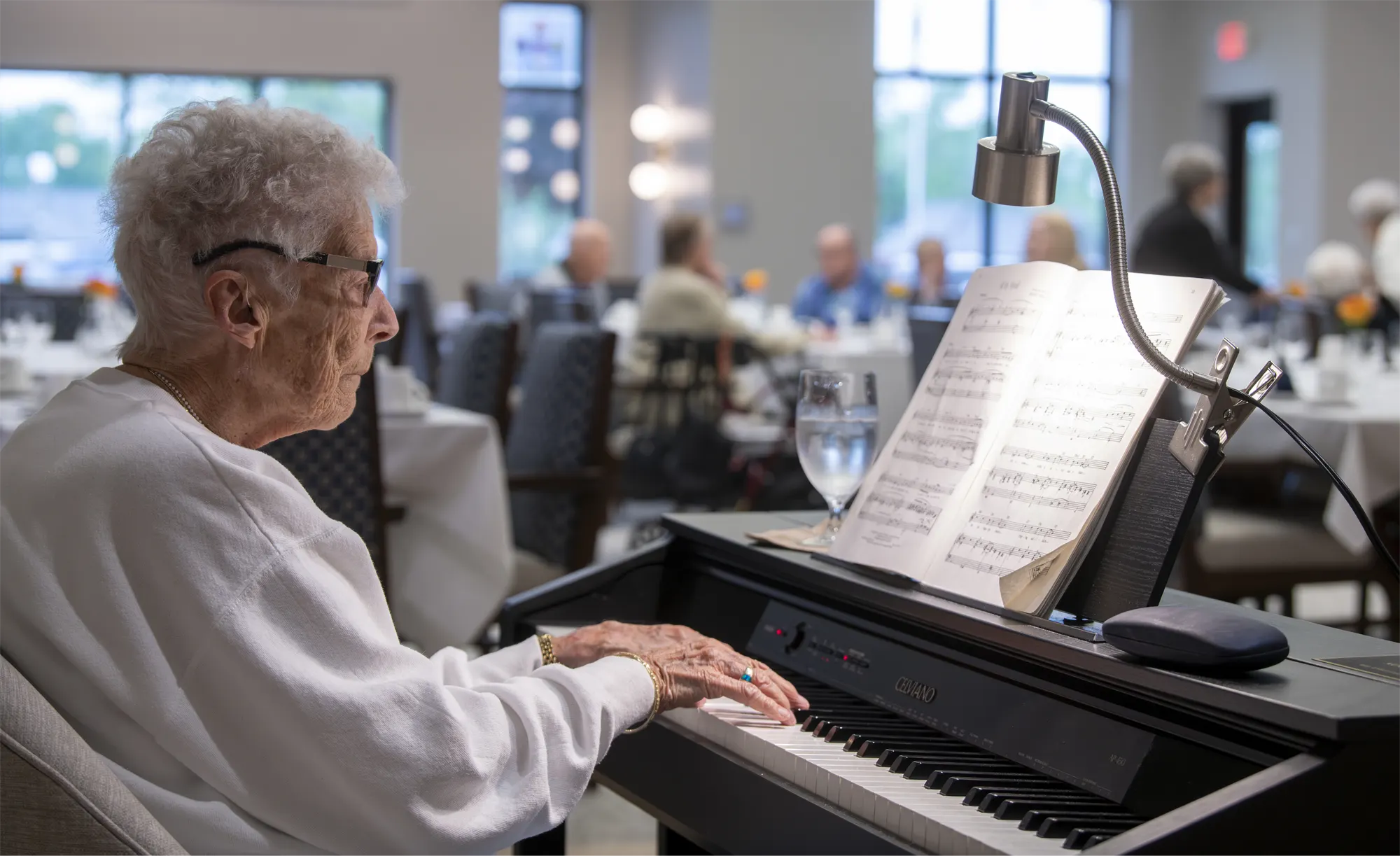
This is why activities like singing, playing an instrument, or listening to favorite playlists can be particularly meaningful for older adults living with cognitive changes. Music can bridge gaps, evoke joy, and light up emotional responses that words alone sometimes cannot.
Music and Well‑Being
Engaging with music doesn’t just feel good — it can have real benefits for mental and emotional well‑being:
- Music can reduce stress and promote relaxation
- Singing and rhythmic movement can support breathing and coordination
- Playing an instrument can strengthen focus and cognitive engagement
- Listening to familiar tunes can uplift mood and inspire conversation
In settings where older adults participate in music activities regularly, people often report feeling more engaged, socially connected, and emotionally balanced.
Personalized Music Experiences
In addition to shared music activities, personalized music can play a powerful role in daily life. Music connected to someone’s personal history — favorite artists, beloved genres, meaningful lyrics — can help older adults feel grounded and understood.
At Otterbein, residents in memory support and memory care neighborhoods benefit from the nationally recognized Music & Memory™ program, where personalized playlists help unlock memories and spark joy. Customized music experiences like this can improve mood, increase engagement, and foster connection in meaningful ways for individuals experiencing cognitive changes such as dementia.
Make Music Part of Everyday Life
Whether it’s tapping along to a familiar beat, humming a song with a friend, attending a performance, or listening to music that reminds you of home, music can be a joyful part of everyday living. Encouraging older adults to explore music in ways that feel meaningful to them — in community or at home — can contribute to a richer quality of life.
Music as Part of Holistic Well‑Being
Music isn’t a cure‑all, but it is a powerful complement to other aspects of wellness — from social connection to meaningful activity, emotional expression to cognitive stimulation. Integrating music into community life, personal routines, and social activity can make older adults feel more connected, more engaged, and more understood.
Otterbein supports residents across its living and care choices, with opportunities for engagement, creative expression, and activities that help nurture personal passions and support overall well‑being.
Bring the Power of Music to Your Loved One’s Life
At Otterbein, we believe in the transformative impact of music and its ability to enrich the lives of older adults. Our Music & Memory™ program helps residents experience the joy of personalized music, sparking memories and enhancing engagement.
If you’re interested in learning more about how Otterbein can support your loved one’s well-being with music, connection, and care.